Skip to content
All work
BotsAIIntegrations2026 · ~3 min read

Ozon and Wildberries product analysis from a single article number

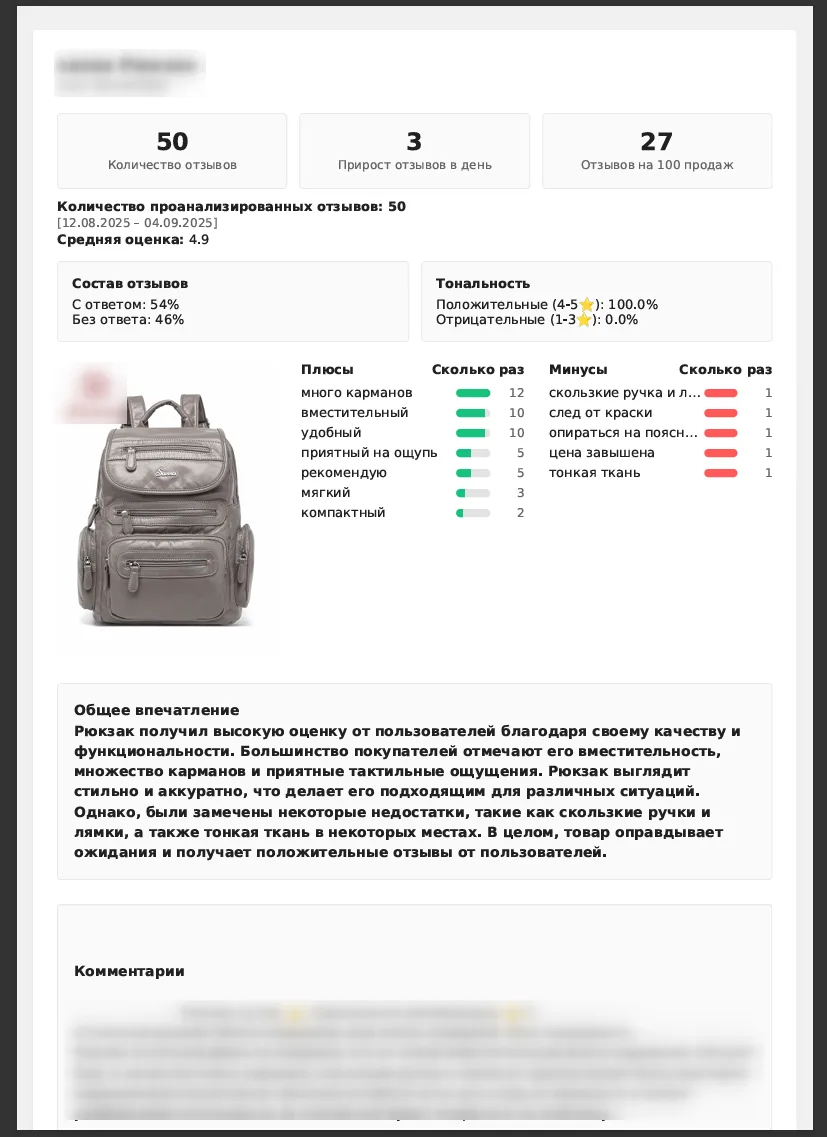
The user types an article number — the system fetches the product from the marketplace, has an AI work through the reviews and returns a finished PDF: ratings, sentiment, and the recurring pros and cons in customers' own words.

Ozon and Wildberries product analysis from a single article number
A finished report as the system returns it: review count and daily growth, sentiment, recurring pros and cons with mention counts, an overall impression and customer quotes. The listing belongs to an unrelated seller — its name, article number and the quotes themselves are masked.

# The problem

The client is a company selling on marketplaces. The competitor-analysis tool was not for their own team: they offered it to their users, and every generated report was charged against the user's internal balance. This kind of analysis is normally done by hand. Open the competitor's listing, scroll the reviews to the end, note down what gets praised and what gets complained about, judge how recent the ratings are — then repeat for every product you are looking at. It eats time, the result stays in someone's head or in a note nobody else can use, and a month later it all has to be done again. That set the requirements. The user types one article number and needs to know nothing else. The result is a document they can save and send, not a window in an interface. And the data comes from the public product and review pages: the marketplaces grant nobody official access to somebody else's listings.

# The solution

Data collection works at the HTTP level, with no headless browser. The job was to reproduce what a real browser does — the session, the set and order of headers, the request signatures — and get the same responses from an ordinary aiohttp client. Ozon took the longest: their protection is documented nowhere, so the work went hypothesis by hypothesis — what exactly is checked, in what order, and what breaks at the slightest deviation. The usual route here is to start Playwright or Selenium and drive a real browser. It works, but every parallel report costs a separate browser process and hundreds of megabytes of memory. An HTTP client is an order of magnitude cheaper, which is why the tool could serve a stream of users instead of one at a time. ChatGPT handles the reviews: it reduces dozens of texts to sentiment, to recurring pros and cons with a mention count, and to an overall impression. The finished report is assembled as styled HTML and printed to PDF. The second half runs on the official seller APIs — new reviews and questions about the company's own products arrive from there. ChatGPT drafts the reply, but not out of thin air: the knowledge base sits in PostgreSQL and administrators fill it from Excel exports. The model first works out which article is being discussed, then pulls the relevant fragments through RAG and writes the answer from those. Handing customer correspondence entirely to a machine is risky, so there are two modes. The operator gets the drafted reply in Telegram and confirms it with one button — or auto-reply is switched on selectively, by review rating and separately for questions. High-rated reviews can be closed automatically while low ones wait for a person.

# The outcome

One report takes 15–30 seconds, and nearly all of that is waiting on the model; the data collection itself barely affects the total. Development took a month. I have no usage figures: the client kept the billing and the statistics on their side. The project is switched off at the moment, and not because of the code. The client ran into hosting constraints in Russia that affected the Telegram half. I proposed moving the service to a European server; the client chose to pause instead.

# How it works

  1. UserTypes one article number and fills in nothing else.
  2. Telegram botTakes the article number, charges the balance and returns the finished file.
  3. Collection · aiohttpWorks at the HTTP level: session, headers, request signatures. No headless browser.
  4. Ozon and WildberriesPublic product and review pages. The marketplaces grant nobody official access to somebody else’s listings.
  5. ChatGPTReduces dozens of reviews to sentiment, recurring pros and cons, and an overall impression.
  6. PDF reportStyled HTML printed to PDF, so the result can be saved and sent on.

Dashed: not my work — platforms and the client’s own systems

Next project

2bix — a builder for business automation

Need something similar?

Discuss the task